

By Fred Gibbs
Just to be clear, the opinions and statements made within my articles are strictly mine and may not necessarily reflect any policy or position of the Arizona Pilots Association.

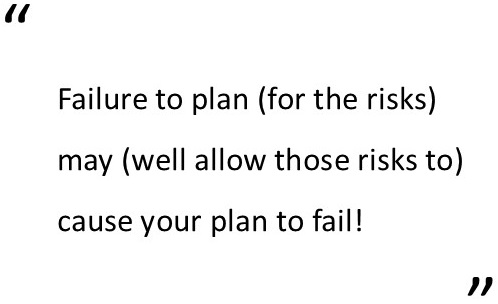
You have heard me say this at many a safety program: “I have never met a pilot who got up in the morning and decided to go out and crash his airplane. No pilot ever plans to become a statistic in my safety programs”. Instead, we all approach every flight believing it will end successfully. Too often, events conspire against us – or we just screw up – and the flight’s outcome isn’t what we planned. The chart above shows those events, level of risks, and the fatality rates. Pre-flight planning helps us mitigate those risks. Like we preach – Failure to plan (for the risks) may (well allow those risks to) cause your plan to fail! You already know almost all of these risks, and our safety programs are designed to keep us focused on those risks and the mitigation strategies.
LOSS OF CONTROL
It should come as no surprise that our old friend “Loss of Control” leads the list, with both in-flight and on-ground events occupying the top two spots in this list. Perhaps unsurprisingly, the chart shows we lost control on the ground a lot during 2018, but relatively few of those mishaps were fatal. I’d bet most of these events involved taildraggers, or free-castering nosewheel-type aircraft. By the way, you know that big thing on the back of your airplane that sticks straight up with the left-right rudder-thingy on it? It really comes in handy for landing!!
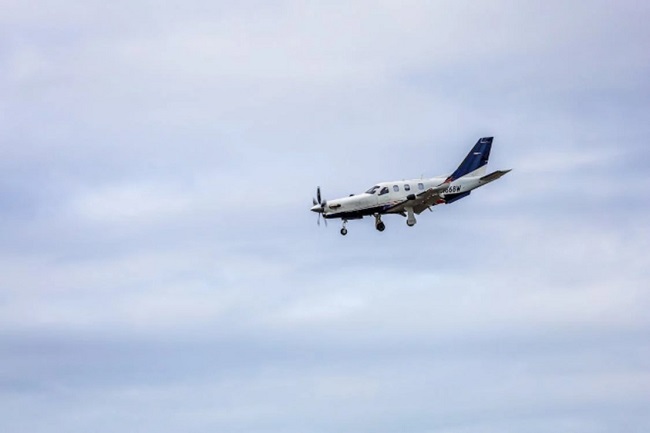
Now, in-flight loss of control is an entirely different issue! Industry and government have literally spent years identifying and highlighting the various factors contributing to in-flight loss of control. According to most NTSB reports on the topic of in-flight loss of control accidents, the majority typically involve some type of stall. The report lists virtually every type of stall known to mankind: straight-ahead, accelerated, takeoff/climb (back side of the power curve), yawing, the classic overbanked turn-to-final, the skidding turn/cross-controlled stall, and this new one, the torque-induced stall. This newly introduced stall, although not yet formally introduced or accepted, occurs with very high-powered single-engine aircraft. The very latest accident, not here in Arizona, was a TBM700 initiating an instrument go-around. The pilot shoved the throttle up on his 600shp turbine while retracting the gear and flaps in a climbing turn to go around at very close to the published stall speed in that configuration. Needless to say, it did NOT work, the aircraft stalled, and the pilot pancaked the aircraft into the ground. Unsaid, but commonly understood in all this, is that these loss-of-control events occurred close to the ground, and the pilot either failed to recover in a timely manner or simply did not have enough altitude to recover. The events can involve all airplanes, but one other type is relegated only to twins: the ever-dangerous VMC rollover. A very high-powered single is susceptible to the same type of event!
When it comes to mitigations, it’s easy to simply say that pilots need to fly the airplane. But what is also true is that pilots in these high-powered single-engine airplanes need to get training and understanding of the torque-induced, low speed, high-drag stall possibilities and potential for occurring. According to a 2010 presentation to an American Institute of Aeronautics and Astronautics conference, by Steve Jacobson of the NASA Dryden Flight Research Center, “Human induced LOC [loss of control] causal factors – like not understanding the torque-induced probability of a low-speed rolling moment - are a stronger contributor to LOC accidents when compared to systems-induced and environmentally-induced causal factors.”
Potential mitigations initially focused on technology, like envelope-protection schemes for jet transports plus angle-of-attack (AoA) indicators for smaller aircraft. After all, this was an aerospace industry conference. As Jacobson noted, “Avoidance and detection mitigations should be a higher priority than recovery-based mitigations but…recovery-based mitigations are important for ‘breaking the chain’ of events.” He added: “Prevention and recovery training may have a nearer term impact than technology-based solutions” and, “New technologies and NextGen operations may introduce new and unforeseen LOC hazards.”
Lacking current state-of-the-art envelope-protection technology, the bottom line here is it’s up to the pilot to avoid losing control and to know how to regain it when it’s lost. And good luck adapting that technology to the Super Cub out looking for Alaskan moose!
There are three basic categories of factors leading to loss of control: systems-induced, environmental, and human.
The Air France Flight 447 tragedy, in which ice crystals plugged a pitot tube, causing the Airbus A330’s fly-by-wire systems to disengage, leaving the crew with a situation they didn’t understand and couldn’t fix, combines elements of all three. For the typical personal airplane, new autopilot technology can help, along with angle-of-attack indicators. The environmental factors to avoid include airframe icing, thunderstorms, wind shear and reduced visibility. Here are some human factor mitigations:
- Be honest with yourself about your knowledge of all kinds of stalls, and your ability to anticipate and react to them.
- Understand/maintain currency on the equipment/airplanes you operate.
- Maximize training opportunities for your particular airplane.
- Thoroughly prepare for the environments in which you’ll be flying.
- Anticipate, manage, and minimize distractions.
- Increase situational awareness, including through devices such as angle-of-attack indicators.
QUIZ of the MONTH: It is altimeter questions month…
- What is pressure altitude?
- The indicated altitude corrected for position and installation error
- The altitude indicated when the barometric pressure is set to 29.92
- The indicated altitude corrected for non-standard temperature and pressure
- The indicated altitude when set to field elevation
- Under what condition(s) is indicated altitude the same as true altitude?
- If the altimeter has no mechanical or compass error
- When at sea level under standard day conditions
- When at 18,000 feet MSL with the altimeter set at 29.92
- When at 18,000 feet AGL with the altimeter set at 29.92
- What is true altitude?
- Your vertical distance above sea level
- Your vertical distance above the terrain
- Your vertical distance above the standard datum plane
- Your indicated altitude corrected for temperature and pressure
- Ok, so then what is absolute altitude?
- Your vertical distance above sea level
- Your vertical distance above the terrain
- Your vertical distance above the standard datum plane
- Your indicated altitude corrected for temperature and pressure
- When the density altitude is higher than the chart in your POH goes, i.e., as shown in the performance table –
- Interpolate the data and adjust your anticipated takeoff performance on that calculation.
- Extrapolate the data and adjust your anticipated takeoff performance on that calculation.
- Do not attempt takeoff until conditions permit calculations from the POH to determine safe takeoff and climb out performances.
- If you have more than 8000 feet of runway with no obstructions off the end of the runway, reduce your takeoff weight by 10% and increase both your Vr and Vy by 10%.
(Answers at the bottom of the Safety Program section.)
SAFETY PROGRAMS
Sorry to report that there are no APA FAASTeam safety programs currently scheduled for the next 2 months as of right now. However, more programs are planned over the next couple of months around the state. Simply log on to the Internet and go to WWW.FAASAFETY.GOV, click on “Seminars” and start checking for any other upcoming seminars. Masks are optional but are recommended.
Should you desire a particular safety or educational program at your local airport or pilot meeting in the future, such as the BasicMed program, our “Winter Wonderland” snow season special, ”The Aging Pilot”, Radio Phraseology, or my newest one on LIFR approaches, which discusses the how’s, why’s, and pitfalls of shooting an approach all the way down to minimums and missed approaches, simply contact me at This email address is being protected from spambots. You need JavaScript enabled to view it., or call me at 410-206-3753. Arizona Pilots Association provides the safety programs at no charge. We can also help you organize a program of your choice, and we can recommend programs that your pilot community might really like. There are also a lot of great webinars online, each about an hour long, and worth credits towards your WINGS participation. You might find one that is right up your alley or really “tickles yer fancy”!!
(answers)
- b. Pressure altitude is the airplane’s height above the standard data plane when set to 29.92. All aircraft operating above 18,000 feet/FL180 use this altimeter setting.
- b. Indicated altitude is the altitude read directly off the altimeter. True altitude is the actual vertical distance above mean sea level when it is set to the local altimeter setting. These two values can only be the same when standard atmospheric conditions exist.
- a. True altitude is defined as the vertical distance of the aircraft above sea level. I believe sea level is another arbitrary value: last time I checked, the Atlantic and the Pacific oceans are not equally level. If they were, why would we need the locks in the Panama Canal to raise and lower the ships passing thru? (PS – I do, however, believe they are level around the tips of Africa and South America.) OK, back to aviation: If you are at an airport lacking weather reporting, and thus without altimeter information, set your altimeter to read field elevation and look at the Kollsman window to see what the altimeter setting is. (Although it may not be exactly correct, lacking temperature correction, it certainly is close enough for government work!)
- b. Absolute altitude is defined as your vertical distance above the ground. This is, in my opinion, almost a useless value unless you are working on your commercial rating and trying to understand pivotal altitude or flying a C-130 “Spooky” gunship circling with your side mounted guns locked on to the target!
- c. Interpolating is working with top and bottom numbers to determine intervening numbers or values. Extrapolating is projecting out beyond the top or bottom numbers, i.e., guessing what those numbers might be. Projecting performance above what the manufacturer’s has included in the POH can be deadly. If no performance values are stated in the POH, wait until the winds, density altitude, max gross weights, runway lengths, etc., fall back within the POH specs. Operating outside those performance specs/limits may well make you a test pilot in a potentially deadly environment. Is that a risk you would want to take with you family on board?