
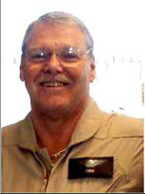
By Fred Gibbs
WOW! I got my first ride in a beautiful Cirris Vision Jet, ever! What an amazing airplane and an absolute pleasure to fly – if you have all the training and experience! I was invited to fly along on an Angel Flight to pick up and deliver some critical blood samples. Now I am quite used to the automation in the Cirrus SR22T’s as well as other variations of automation in our regular GA airplanes, but the Vision Jet is AWESOME! Being totally unfamiliar with this type of aircraft, I was the student watching and learning from the best.

The pilot, David, is a retired airline pilot, captain on several types of Airbus aircraft, and, well, it was a real pleasure flying with a true professional. He was, without a doubt, the master of this ship, while the autopilot did his bidding. Two large displays, a PFD and an MFD, and three small screens, one showing what looks like the home page on a Garmin 650, another screen for route programing and the third the radios, all touch screens. Just below the three small screens are the awesome autopilot controls. It is easy to fly but requires a lot of learning on how it all works, all the emergency procedures and how all the pieces operate together. And, boy, does it ever fly nice! There we were, cruising along at FL310 at Mach .52, coming back home from San Bernadino, California to Flag, and it only took just over an hour! Oh, by the way, cruising along at Mach .52 at FL310, the fuel flow was 63 gallons per hour. FYI, that equates to a fuel burn rate of roughly one gallon each minute!
PS - Anybody got an extra 2 million to loan me to buy one??


How about some wind/wind shear Refresher:
Thinking back to my traditional aviation weather training as a Flight Service Specialist, I realized they didn’t specifically address intense wind events where the presence of high wind all by itself wreaks its own special form of havoc. This year there were numerous high wind events — several haboobs in Arizona, a derecho in the Midwest, and wind-driven fires in California, Oregon, Colorado and especially Canada. There were also unusual windstorms that caused major dust storms, flipped airplanes, and uprooted trees all across the country and destroyed billions of dollars in property. Anomalous and novel wind events happen, but extreme wind events induced by the added energy from a warming atmosphere are beginning to seem like the new normal. Whether or not you agree with that view, you would probably agree that windstorms demand their own risk management considerations. A major wind event can occur at ground level and aloft, probably blowing in different directions, thanks at least in part to the Coriolis effect, with shear zones between abrupt wind directional changes. But even if the forecast or weather report doesn’t explicitly advertise windshear, count on encountering it in a windstorm.

WINDSHEAR – Welcome to Flagstaff!!
Most of the time, the Flagstaff METAR does not mention low level wind shear (LLWS), but the ATIS does. The wind shear is NOT detected by the AWOS since it only measures the wind at the surface 1000 feet down the runway. It is the tower’s call when to append the LLWS notice onto the ATIS. They can add it when reported by a pilot experiencing it on final approach, or if the wind gusts reach a certain level. At a non-towered airport, listen to the ASOS report and be vigilant of the ASOS reported steady-state wind velocity compared to the gust velocities. The greater the difference, the greater the possibility for wind shear. FYI, here at Flagstaff, it is not unusual for the wind to be completely 180 degrees different from one end of the runway to the other end.
Obviously, the worst place to encounter windshear is near the runway. On an approach during a strong wind event, one sign you might be in for low-level windshear is when your crab angle on final approach is exaggerated or perhaps out of sync with the reported surface wind. Some glass cockpits may show you the current wind vector and velocity, but DO NOT show you any gust data. When your calculated wind direction is significantly different from the reported wind speed and direction on the ground, plan on encountering some windshear. And do not believe the ATIS reported winds – that piece of information is very old and unreliable!

You are also particularly vulnerable during departures, especially here at Flagstaff. The departure can present you with several critical factors and constraints in a very short time period and a difficult environment. You are at full power with no reserves to tap into if you encounter an overwhelming downdraft. You are at a higher angle of attack and slower speed while in proximity to the ground and obstructions, and you will be at your highest trip weight which saps climb rate performance. This is not the time you want to encounter a violent downdraft or a side gust pushing you off the center line and/or toward obstructions. Departures into high wind conditions require your focus on your “A” game. Remember your training and be ready to do battle with Mother Nature!
Crosswinds
When confronting crosswinds during landing or takeoff, obviously the first things to consider are wind direction and runway orientation. The airplanes most of us fly have a maximum demonstrated crosswind component, which basically reflects the effectiveness of the rudder demonstrated during flight testing. Others may have hard limits above which it is illegal to operate.

For any given airframe, there is a point where the amount of crosswind is more than the rudder can counteract. At landing speeds, the airplane will not be able to hold the centerline and will drift downwind, risking loss of control. There are a few ways to combat crosswinds, like landing a bit faster if runway length isn’t an issue, or sticking the landing quickly, although not necessarily graceful or a perfect 10, and getting the aircraft slowed down (carefully using the brakes) before deceleration and lack of airflow saps rudder authority. And, certainly, know how and when to set the controls (ailerons AND elevators) correctly for taxiing in cross wind/tailwinds. Multi-engine pilots also have the option to use differential power.
No matter what techniques you use in a strong crosswind, every pilot should know the airplane’s crosswind limits, don’t fudge any personal minimums, and get lots of practice at cross wind landings!!
NOV. QUIZ : (Answers at the bottom of the Safety Program section.)
- Hmmm, I am flying home VFR using my GPS and getting flight Following, on a ground track of 178, but holding a wind correction heading of 183 degrees to my destination airport. Should I be at an even plus 500 feet or an odd altitude plus 500 feet??
- Even plus 500
- Odd plus 500..
- What ever ATC assigns me….
- I can do whatever altitude I want since I am VFR
- Alrighty now!! The ASOS is reporting 5 miles visibility with UP. HUH? What the heck is UP?
- Something is up (wrong) with the ASOS..
- Unusual Precipitation
- Usual (light) Precipitation
- Uknown Precipitation
- Almost all of us pilots have read, seen or have hanging on a wall, that famous poem –“ Oh, I have slipped the surly bounds of earth and danced the skys on laughtered silvered wings” and on and on… by John Magee. So where did he start writing that famous poem?
- In his notebook on board a Lancaster bombing mission.
- On a napkin in the mess hall..
- On an old envelope while flying a Spitfire.
- In a German prisoner-of-war camp..
- OK, you think you have finally memorized all of the FAA acronyms, right?? OMG, what the heck is AHA?
- Airport Hold Area.
- Associated Hotspot Area.
- Automated Hazardous Area Alert.
- Aircraft Hazard Area.
- OK, here we go. I will set the scenario and see how this one falls out. It is a Sunday Afternoon and I have just landed at an airport for fuel on my way home in my C172. I top off both tanks, jump in my airplane start it up, and discover the left fuel guage does not work for some (stupid) reason. No matter what I do, I cannot get it to work. I am only 1 hour from home, the right fuel tank has 19 gallons usable, and I only burn 6.5 gallons per hour, so I have more than enough to get home and still meet the 30 minute reserve rule. So, using the fuel selector valve I select the right tank, the one with the operating fuel guage, and head for home. Now, the question is, was I legal to do that or did I violate the regulation (FAR 91.205) that says I must have an operating fuel guage for each tank, emphasis on plural guages??
- I Never thought about that, but it is a stupid rule,left over from the 1930’s!.
- I believe I am legal since I have an operating fuel guage on the tank I am flying on.
- By the way the rule is written . It was illegal to fly the airplane.
- Should I have called the FSDO for a ferry permit?
SAFETY PROGRAMS
Simply log on to the Internet and go to WWW.FAASAFETY.GOV, click on “Seminars” and start checking for any other upcoming seminars. Should you desire a particular safety or educational program at your local airport or pilot meeting in the future, such as the BasicMed program, our “Winter Wonderland” snow season special, ”The Aging Pilot”, Radio Phraseology, or my newest one on LIFR approaches, which discusses the how’s, why’s, and pitfalls of shooting an approach all the way down to minimums and missed approaches, simply call or text me at 410-206-3753 or email me at either This email address is being protected from spambots. You need JavaScript enabled to view it. or This email address is being protected from spambots. You need JavaScript enabled to view it..
Arizona Pilots Association provides the safety programs at no charge. We can also help you organize a program of your choice, and we can recommend programs that your pilot community might really like. There are also a lot of great webinars online, each about an hour long, and worth credits towards your WINGS participation. You might find one that is right up your alley or really “tickles yer fancy”!!
The answers, kinda sort of:
- b. § 91.159 VFR cruising altitude or flight level.
Except while holding in a holding pattern of 2 minutes or less, or while turning, each person operating an aircraft under VFR in level cruising flight more than 3,000 feet above the surface shall maintain the appropriate altitude or flight level prescribed below, unless otherwise authorized by ATC:
(a) When operating below 18,000 feet MSL and—
(1) On a magnetic course of zero degrees through 179 degrees, any odd thousand foot MSL altitude + 500 feet (such as 3,500, 5,500, or 7,500); or
(2) On a magnetic course of 180 degrees through 359 degrees, any even thousand foot MSL altitude + 500 feet (such as 4,500, 6,500, or 8,500).
(b) When operating above 18,000 feet MSL, maintain the altitude or flight level assigned by ATC.
- d. AWOS/ASOS PRECIPITATION DECODER –
RA: liquid precipitation that does not freeze; SN: frozen precipitation other than hail; UP: precipitation of unknown type; intensity prefixed to precipitation: light (-), moderate (no sign), heavy (+); FG: fog; FZFG: freezing fog (temperature below 0°C); BR: mist; HZ: haze; SQ: squall; maximum of three groups reported; augmented by observer: FC (funnel cloud/tornado/waterspout); TS (thunderstorm); GR (hail); GS (small hail; <1/4 inch); FZRA (intensity; freezing rain); VA (volcanic Ash)
- c. YUP, in his Spitfire, apparently on a not so dangerous flight. He finished it up after the flight.
- d. Aircraft Hazard Areas (AHA) are used by ATC to segregate air traffic from a launch vehicle, reentry vehicle, amateur rocket, jettisoned stages, hardware, or falling debris generated by failures associated with any of these activities. There are many AHAs in the United States. They are activated via the Notice to Air Mission (NOTAM) system. Pilots should be aware of where these AHAs are and review NOTAMs before each flight to determine if there are any airspace restrictions for the AHAs along their planned route.
- THIS ONE IS REALLY OPEN FOR DISCUSSION (BUT NO FIGHTING) AROUND THE BAR SOME NIGHT---
Here is the Regulation:
91.205 Powered civil aircraft with standard category U.S. airworthiness certificates: Instrument and equipment requirements.
(a) General. Except as provided in paragraphs (c)(3) and (e) of this section, no person may operate a powered civil aircraft with a standard category U.S. airworthiness certificate in any operation described in paragraphs (b) through (f) of this section unless that aircraft contains the instruments and equipment specified in those paragraphs (or FAA-approved equivalents) for that type of operation, and those instruments and items of equipment are in operable condition.
(b) Visual-flight rules (day). For VFR flight during the day, the following instruments and equipment are required:
(9) Fuel gauge indicating the quantity of fuel in each tank
PS – No doubt many of us would have gone with answer (a)….